Digital identity • breach exposure • blue-team reminder
BreachD chose the blue team.
BreachD showed up at 9:42, dragged in a terminal, and built a blue-team command room right inside the portfolio.
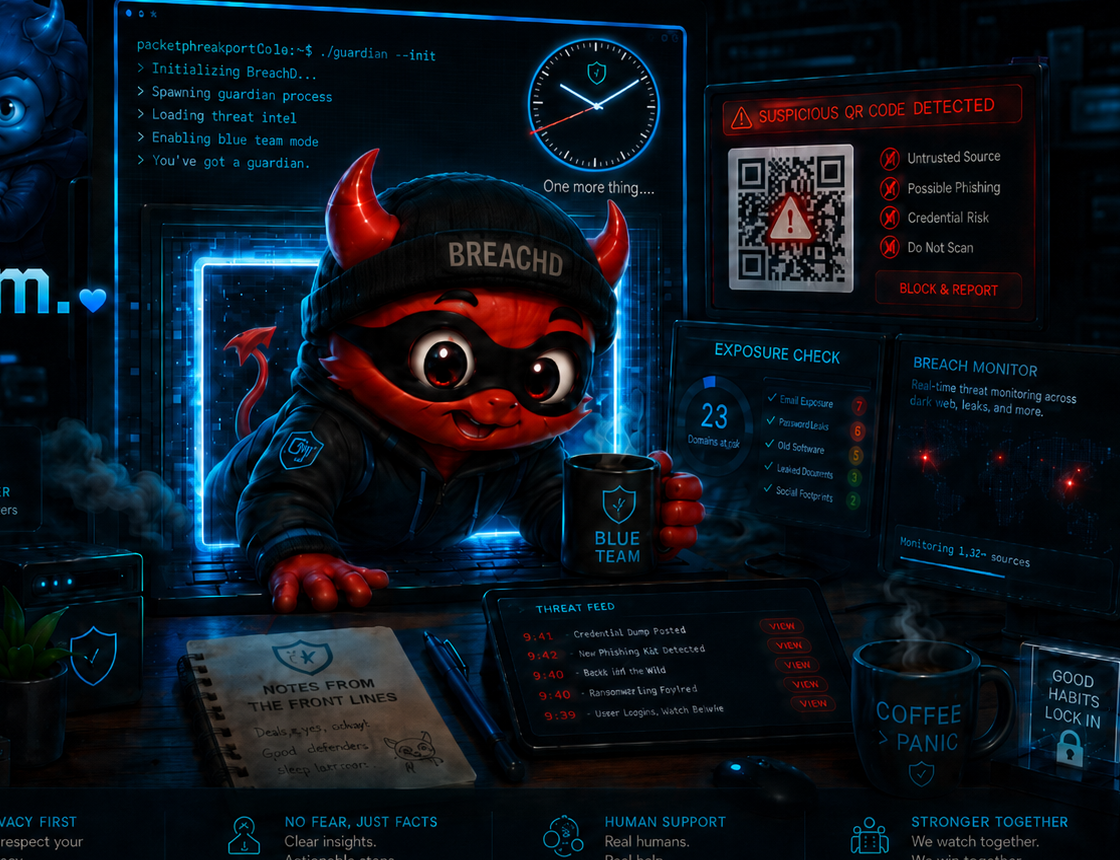
BreachD says:
Click a glowing panel. The room talks back.
Guardian Console • Interactive activity
Initialize the guardian.
Start the boot sequence, run a quick exposure workflow, or open the real Have I Been Pwned check. PacketPhreak does not store email addresses.
Spot the Phish • Playable activity
Spot the Phish.
Click the suspicious cards. Leave the safe cards alone. BreachD gives you a score and a tiny blue-team pep talk.
Score0
Round1
Statusready
Meet the lore
Meet BreachD.
BreachD was not installed. BreachD emerged.
At 9:42, inside a quiet corner of PacketPhreak’s portfolio, a terminal window flashed, a cursor blinked, and a tiny daemon crawled out of the glow carrying a mug that said BLUE TEAM.
Nobody knows exactly where BreachD came from. Some say it was born in an old terminal session that never closed. Some say it escaped from a forgotten log file. Others believe it has been watching the internet since the days when people trusted links just because they were blue and underlined.
BreachD has worn every hat: red, blue, gray, black, purple, bug bounty, compliance, incident response, “temporary exception,” and the cursed hat labeled we’ll fix it after go-live.
No fear. Just facts.
No fear. Just facts.
Clean up the footprint.
Checking exposure is only the first step. The win is reducing password reuse, enabling MFA, retiring old accounts, and paying closer attention to links and QR codes that ask for trust too quickly.